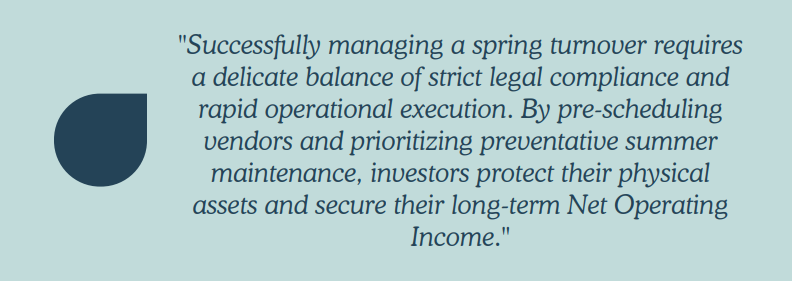

We have reached mid-May in Minnesota. The lakes are busy, the weather is finally cooperating, and the real estate market is operating at its absolute peak. If you followed our strategic leasing advice earlier this year, you purposefully structured your leases to end in the spring and summer.
Now, that strategy is coming to fruition. You likely have tenants moving out and new tenants preparing to move in.
While the spring leasing season is fantastic for securing high rental rates, it is also the most operationally demanding time of the year for property owners. Handling a tenant turnover requires a delicate balance of legal compliance, rapid vendor coordination, and meticulous property inspections. Furthermore, as we transition into the warmer months, you must immediately pivot to your summer maintenance planning.
Today, we are taking a deep dive into the operational side of real estate investing. We will outline the exact best practices for navigating the spring turnover season in Minnesota and provide a comprehensive checklist to protect your physical asset from the upcoming summer heat.
The Mid-May Sprint: Navigating the Busiest Season in Real Estate
In property management, a turnover is the window of time between one tenant moving out and the next tenant moving in. This is the most vulnerable time for your rental property. Every day the unit sits empty, you are losing money.
However, rushing a turnover is a massive mistake. If you fail to conduct a thorough inspection, you might miss tenant damage and end up paying for repairs out of your own pocket. If you fail to clean the unit properly, your incoming tenant will start their lease angry and dissatisfied.
Successfully managing this transition requires a documented, repeatable system.
Spring Turnover Best Practices: Where Speed Meets Accuracy
To protect your cash flow and your assets, you must execute the turnover flawlessly. This begins the moment your outgoing tenant hands over the keys.
The Meticulous Move-Out Inspection
The move-out inspection is not a casual walkthrough. It is a rigorous audit of your property. You must compare the current condition of the home to the documented move-in inspection from the previous year.
You are looking for the critical difference between "normal wear and tear" and "tenant damage."
Normal Wear and Tear: Faded paint, worn carpet in high-traffic areas, or scuffed hardwood floors. You cannot charge a tenant for this.
Tenant Damage: Large holes in the drywall, broken window blinds, stained carpets from unapproved pets, or broken appliances due to negligence. These are items you can deduct from the security deposit.
You must take clear, time-stamped photographs of every single room. Documenting the condition of the property is your only defense if a tenant disputes a security deposit deduction in court.
The 21-Day Rule for Security Deposits
Minnesota law is incredibly strict regarding security deposits. Landlords have exactly 21 days from the end of the lease (and receipt of the tenant's forwarding address) to return the full security deposit or provide a written, itemized list of deductions.
If you miss this 21-day deadline, you forfeit the right to withhold any money for damages. Furthermore, the tenant can sue you for financial penalties. This legal timeline means your turnover process must be swift. You need contractors to provide repair estimates immediately so you can finalize the accounting and mail the required documents within three weeks.
The Art of the Quick Turnaround
The secret to a fast turnover is pre-scheduling. Do not wait until the tenant moves out to call your painter or your cleaning crew. Vendors in Minnesota are incredibly busy in May and June.
Two weeks before the move-out date, you should have your turnover team scheduled. Book the professional carpet cleaners for day two of the vacancy. Book the deep cleaning crew for day three. By stacking your vendors efficiently, you can turn a standard property around in less than five days, allowing your new tenant to move in by the first of the month.
Summer Maintenance Planning: Preparing for the Heat
Once the new tenant is settled, your job is not over. You must immediately shift your focus to summer maintenance planning in the Twin Cities and beyond.
The Minnesota winter is brutal on real estate, but the summer humidity brings its own set of challenges. Preventative care is the key to avoiding catastrophic, expensive emergency repairs.
HVAC and Air Conditioning Servicing
Do not wait for the first 90-degree day in July to find out the air conditioning is broken. HVAC servicing is the single most important preventative maintenance task for the summer. You must hire a licensed professional to inspect the AC condenser, check the refrigerant levels, and clean the coils.
Additionally, you must ensure the furnace filters have been changed. A clogged filter will force the AC unit to work twice as hard, leading to premature mechanical failure. A $150 preventative service call in May can save you from a $5,000 unit replacement in August.
Exterior Audits and Water Management
The heavy snow and ice dams of the previous winter likely took a toll on the exterior of your property. Spring is the time to audit the shell of your investment.
Roof Inspections: Look for missing shingles or flashing damage caused by ice.
Gutter Cleaning: Ensure all gutters are securely attached and free of spring debris. Water must be directed far away from the foundation to prevent basement flooding during heavy summer thunderstorms.
Deck and Patio Care: Inspect wooden decks for rot or loose railings. Re-sealing the wood will protect it from the intense summer sun.
Market Breakdown: Metro vs. Rural Maintenance Needs
Your maintenance checklist will vary significantly based on your geographic location.
The Twin Cities Metro: Landscaping and HOA Compliance
In the Twin Cites suburbs, curb appeal is everything. If you own a single-family rental here, landscaping must be a priority. You need to clearly define in the lease whether the tenant or the landlord is responsible for mowing the lawn and trimming the hedges.
Furthermore, many suburban properties exist within Homeowner Associations (HOAs). HOAs are notorious for issuing fines for overgrown lawns, visible trash cans, or peeling exterior paint. Proactive exterior maintenance keeps your property compliant and protects you from unnecessary municipal or HOA fees.
Greater Minnesota: Septic Systems and Well Maintenance
If you invest in rural areas or Greater Minnesota, your maintenance planning is much more mechanical. Many of these properties rely on private well water and septic systems instead of city utilities.
A septic system failure is one of the most expensive and unsanitary emergencies a landlord can face. Spring is the ideal time to have the septic tank inspected and pumped if necessary. You should also test the well water quality to ensure it remains safe and compliant with health standards for your tenants.
The Financial Impact: Preventative Care Protects Your NOI
Many DIY landlords view routine inspections and preventative maintenance as unnecessary expenses. They adopt a "if it isn't broken, do not fix it" mentality. This is a massive financial error.
Deferred maintenance is the silent killer of your Net Operating Income (NOI). If you ignore a small exterior caulking issue in May, water will seep behind the siding all summer. By October, you will be paying thousands of dollars for mold remediation and structural repairs.
Treating your property to regular preventative care extends the lifespan of your expensive mechanical systems, keeps your tenants happy, and preserves the long-term appreciation of your asset.
Protect Your Asset with Angie Toomey Real Estate Group
Executing a flawless spring turnover and managing a comprehensive summer maintenance plan requires significant time, vendor connections, and legal knowledge. If you are juggling a full-time job while trying to coordinate carpet cleaners and HVAC technicians, you are likely feeling the burnout.
At Angie Toomey Real Estate Group, we handle the heavy lifting. We treat your property like it is our own. Our expert property management team conducts rigorous, legally compliant move-out inspections. We manage the entire security deposit accounting process within the strict 21-day window. Most importantly, we coordinate with our trusted network of licensed vendors to execute routine summer maintenance, ensuring your asset is protected year-round.
Stop stressing over your turnovers and start enjoying your summer.
Is Your Turnover Process Costing You Money?
A prolonged vacancy or a botched security deposit return can wipe out your profits for the entire year. Do not leave your investment to chance. Angie Toomey Real Estate Group provides robust property management services designed to keep your units filled, compliant, and beautifully maintained.
Our Operational Expertise Includes:
Rapid Turnovers: We coordinate expert vendors to get your unit prepped and leased in record time.
Meticulous Inspections: We provide detailed photo documentation to protect you from unwarranted damage claims.
Preventative Maintenance: We actively manage seasonal servicing to extend the life of your property's systems.
👉 Call or text us today to learn how our professional management can protect your portfolio!