We have officially closed the books on the first quarter of 2026. As we head into late April, the spring leasing season is completely underway across Minnesota. For real estate investors and property owners, this is the most critical time to evaluate your portfolio. To make smart decisions about pricing, renovations, or new acquisitions, you need hard data.
The Q1 2026 rental market update for Minnesota presents a fascinating landscape. We are seeing a market that is deeply divided by property type and geographic location. While some sectors are cooling off, others are experiencing unprecedented demand. By understanding these micro-trends, you can position your rental properties to maximize cash flow and minimize vacancy throughout the rest of the year.
Today, we are unpacking the latest data compiled from trusted industry authorities including HousingLink, Redfin, Zillow, Yardi, Colliers, and the Fed. Let us dive into the numbers and build your strategy for Q2 and beyond.
The Big Picture: A Balanced Market in Transition
If you look at the Minnesota rental market from a high altitude, it appears to be stabilizing. We are currently experiencing a balanced market overall with mixed demand depending on where you look. The chaotic, double-digit rent spikes of previous years have settled, giving way to more sustainable growth.
Breaking Down the Rent Averages
Across the Twin Cities, average asking rents are currently sitting at $1,675 according to Zillow. Redfin data paints a similar picture, showing median rents at $1,641. This means the overall average rent sits comfortably between $1,641 and $1,675.
Despite the stabilization, landlords are still seeing positive growth. Zillow data shows a 4.2% year-over-year rent increase. For property owners, this steady 4.2% growth outpaces current inflation, ensuring that your real estate assets continue to build true wealth.
Supply and Vacancy: The 2026 Squeeze is Here
To predict where rents are going, you have to look at supply and demand. The biggest story of Q1 2026 is the dramatic shift in new housing supply.
The 75% Construction Drop
Over the last few years, high interest rates and soaring material costs have forced developers to hit the brakes on new apartment projects. New construction deliveries are down roughly 75% since 2022. Because fewer new units are entering the market, we anticipate this will likely keep vacancy low for the foreseeable future. The massive wave of luxury apartment buildings that flooded the market in 2023 and 2024 is officially drying up.
Tightening Vacancy Rates Across the Metro
This lack of new supply is directly impacting vacancy numbers. Vacancy is currently hovering between 4.3% and 6.7% across the metro area. This is a significant improvement for property owners, as this is down from a peak of 8.4% in 2024, showing a distinctly tightening market. If you own a well-maintained property in a desirable area, you are operating in an environment that heavily favors the landlord.
Submarket Breakdown: Urban Concessions vs. Suburban Demand
While the overall market is tightening, the experience of a landlord in the urban core is vastly different from a landlord in the suburbs.
Urban areas are currently experiencing higher vacancy rates and slightly more concessions. Landlords in dense downtown neighborhoods are still offering incentives (like a free month of rent or waived parking fees) to attract tenants.
Meanwhile, the suburbs are seeing much stronger demand from renters who are looking for more space. The shift to hybrid work models has permanently altered tenant preferences. Renters want home offices, backyards, and proximity to suburban parks. If your portfolio is heavily concentrated in the first and second-ring suburbs of the Twin Cities, you are holding some of the most sought-after real estate in the state.
The Undeniable Reign of Single-Family Rentals
The data from Q1 highlights one undisputed champion in the current real estate landscape. Suburbs and single-family homes remain strong. In fact, rents for houses are rising faster than traditional apartments.
Attracting the Long-Term Tenant
Why are single-family homes outperforming multi-family units? It all comes down to the demographic of the renter. High mortgage rates have kept many would-be homebuyers in the rental pool. These families still want the traditional suburban lifestyle, so they are turning to the rental market to find it.
As a result, single-family homes are seeing lower vacancy rates and exceptionally high demand, which tends to attract highly stable, long-term tenants. When a family moves into a three-bedroom home in a great school district, they are much less likely to move out after twelve months compared to a young professional in a downtown studio apartment. This stability drastically reduces your turnover costs.
Affordability and Shifting Tenant Behavior
While the suburban and single-family markets are booming, landlords must remain highly aware of the current economic pressures facing renters.
The Widening Affordability Gap
The affordability gap is widening across the state. While luxury units are sitting vacant, there is very low vacancy for units priced under $1,200. To put this in perspective, a median 1-bedroom market rate currently sits at $1,178 locally per HousingLink. Properties priced at or below this median threshold are experiencing intense competition and bidding wars among applicants.
High Price Sensitivity and Negotiation
Because of everyday inflation and economic uncertainty, modern renters have high price sensitivity. They are scrutinizing every dollar. For landlords, this high price sensitivity is leading to longer days on the market and more negotiation.
If you list a property for $50 over the fair market value, tenants in 2026 will simply scroll past it. They are no longer willing to overpay. You must expect prospective applicants to ask for slightly lower rent, included utilities, or pet fee waivers during the application process.
Landlord Strategy: How to Win in Q2 and Beyond
Based on the Q1 2026 rental market update for Minnesota, how should you adjust your investment strategy right now?
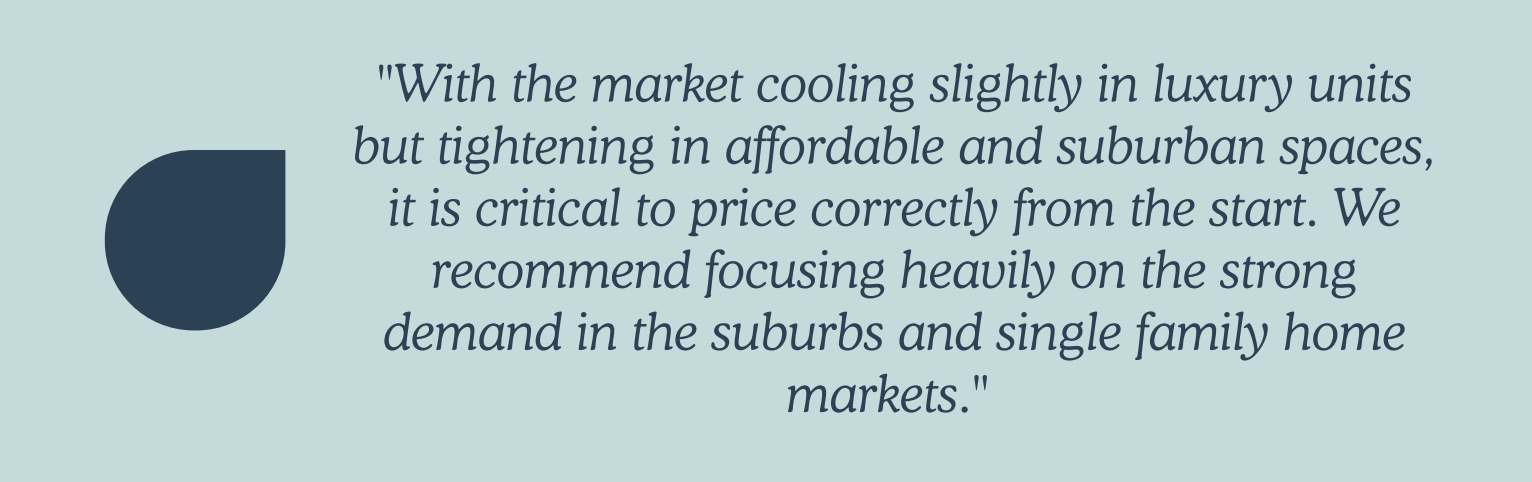
With the market cooling slightly in luxury units but tightening in affordable and suburban spaces, it is critical to price correctly from the start. The days of aggressively pushing rents 10% higher every year are over. If you overprice a unit in today's price-sensitive environment, it will sit empty. A single month of vacancy will destroy any extra profit you hoped to gain from a higher monthly rate.
If you are looking to acquire new properties to expand your portfolio this year, the data provides a clear roadmap. We recommend focusing heavily on the strong demand in the suburbs and single-family home markets. These assets provide the perfect blend of high rent growth, low vacancy, and tenant stability.
Get a Custom Rent Analysis with Angie Toomey Real Estate Group
Interpreting market data is one thing, but applying it to your specific property is another. A fourplex in a rural county will behave very differently from a single-family home in the Twin Cities suburbs.
If you want to maximize your returns in 2026, you cannot rely on guesswork. At Angie Toomey Real Estate Group, we continuously monitor the data from Yardi, Zillow, Redfin, and the Fed to keep our clients ahead of the curve. We know exactly how to price your property to attract high-quality, stable tenants while minimizing your days on the market.
Protect your investment with data-driven property management. Contact us today to discuss how the Q1 trends impact your bottom line.
Is Your Property Priced Correctly for the 2026 Market?
Do not let price sensitivity lead to extended vacancy. The most successful investors rely on professional analytics to set their rates. Angie Toomey Real Estate Group offers expert guidance and full-service property management to ensure your portfolio performs at its absolute peak.
Our Data-Driven Services Include:
Precision Pricing: We use local submarket data to price your unit perfectly from day one.
Targeted Marketing: We highlight the features that suburban and single-family renters are actively searching for.
Expert Negotiation: We handle price-sensitive applicants professionally, protecting your overall ROI.
👉 Call or text me today for a Custom Rent Analysis of your property!